Mar. 24, 2026

When accuracy, clean edges, and fast production matter, CO2 laser cut technology is the solution manufacturers trust.
From acrylic signs to automotive components, CO2 laser cut machines have transformed how businesses process non-metal materials. They deliver precision that mechanical cutting can't match, with edges that often need no finishing.
But not every CO2 laser cut machine performs the same. Understanding how they work and what separates quality equipment from the rest helps you make a smart investment.
This guide covers how CO2 laser cut technology works, its key applications, and how to choose the right machine for your business.
A CO2 laser cut machine starts with a sealed tube filled with carbon dioxide and other gases. When high-voltage electricity passes through, the gas molecules release energy as light.
That light bounces between mirrors inside the tube, amplifying with each pass until it forms a concentrated beam. Mirrors direct the beam along the path to the cutting head, where a focusing lens concentrates it into a microscopic spot—as small as 0.1 millimeters.
When this focused beam hits the material surface, it instantly heats it to thousands of degrees, melting or vaporizing the material along the programmed path. CNC motors control the movement, following the design you've created in software.
All this happens at speeds up to 1,000 millimeters per second. Complex designs that would take hours by traditional methods cut in minutes.
According to Wikipedia, CO2 lasers are the most common type for industrial cutting applications due to their efficiency and clean results.
Manufacturers choose CO2 laser cut technology for reasons that go beyond basic cutting.
Precision is unmatched. The beam width measures in hundredths of a millimeter, allowing intricate details and tight corners that mechanical methods can't achieve.
No tool wear means consistent quality job after job. The beam never touches the material, so there's nothing to sharpen or replace.
Clean edges reduce finishing work. On acrylic, the CO2 laser cut edge comes out flame-polished and transparent. On fabric, the laser seals edges as it cuts, preventing fraying.
Versatility lets one machine handle acrylic, wood, leather, fabric, paper, rubber, and thin metals. This flexibility helps manufacturers expand product lines without new equipment.
Repeatability ensures every part cuts the same. Once settings are dialed in, a CO2 laser cutmachine produces identical pieces thousands of times.
Acrylic letters, lightbox panels, and dimensional signage depend on CO2 laser cut machines for clean edges and precise shapes. The flame-polished finish means signs go straight from machine to customer.
Decorative panels, inlays, and joinery components cut quickly and cleanly. Intricate designs that would take hours by hand finish in minutes.
Garment manufacturers use CO2 laser cut machines to cut multiple layers of fabric at once. The laser seals edges as it cuts, eliminating fraying and speeding production.
Shoes, bags, and accessories demand precision cutting with sealed edges. CO2 laser cutmachines deliver both, with the ability to engrave details in the same pass.
Interior components, gaskets, and trim pieces rely on the repeatability and tight tolerances of CO2 laser cut technology.
Prototyping and short-run production benefit from the speed and flexibility of CO2 laser cutmachines. No tooling costs, no long lead times.
The thickness you cut determines the power you need:
• Up to 10mm: 60-80W
• 10-15mm: 80-130W
• 15-20mm: 130-150W
• 20mm+: 150W or higher
Quality CO2 laser cut machines use precision linear rails (not wheels on rails), welded steel frames, and high-quality laser tubes from brands like RECI or EFR. Ask about the controller too—Ruida controllers are known for reliability and ease of use.
Ask what happens when something breaks. A good manufacturer offers remote diagnosis, spare parts shipped within 24 hours, clear warranty terms, and real people who answer when you call.
At Jowuey, we manufacture CO2 laser cut machines for businesses that depend on them daily.
Every Jowuey machine includes:
• RECI or EFR laser tubes with 12 month warranty
• Ruida controllers for reliable, precise control
• Precision linear rails for smooth motion
• Welded steel frames for stability
• CE certification
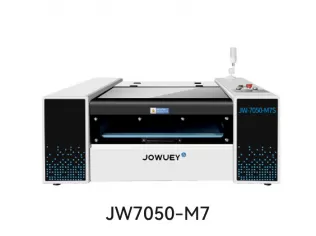
• Jowuey 7050: 700 x 500mm, up to 100W. Small workshops, schools, startups.
• Jowuey 9060: 900 x 600mm, up to 150W. Sign shops, furniture makers.
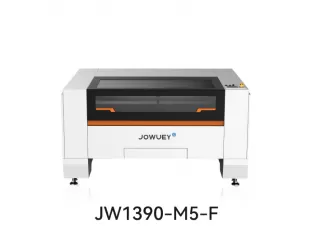
• Jowuey 1390: 1300 x 900mm, up to 180W. Most popular production model.
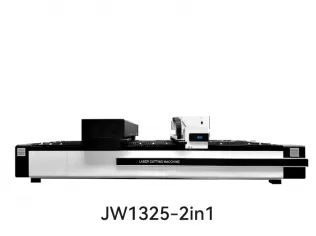
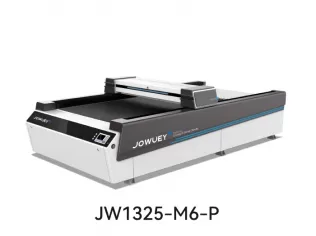
• Jowuey 1325: 1300 x 2500mm, up to 600W. Large-format industrial cutting.
All models are customizable to your specific needs.
CO2 lasers are designed for non-metals. They can cut thin metals under 0.5mm if coated, but for regular metal cutting, fiber lasers are better.
A 100W machine cuts acrylic up to 20mm, wood up to 15mm. Higher power cuts thicker materials.
What's the difference between CO2 and fiber lasers?
CO2 lasers excel at non-metals with superior edge quality. Fiber lasers are designed for metals. Many shops use both.
Yes. Every Jowuey machine includes free remote training, detailed manuals, and video tutorials.
You've read how CO2 laser cut technology works and why it matters. Now see it for yourself.
We offer live video demonstrations. Watch our engineers cut materials like yours in real time. See the edge quality, the speed, and the process up close.
HOT PRODUCT
Navigation
Request a Quote